Durango and Silverton Railroad.
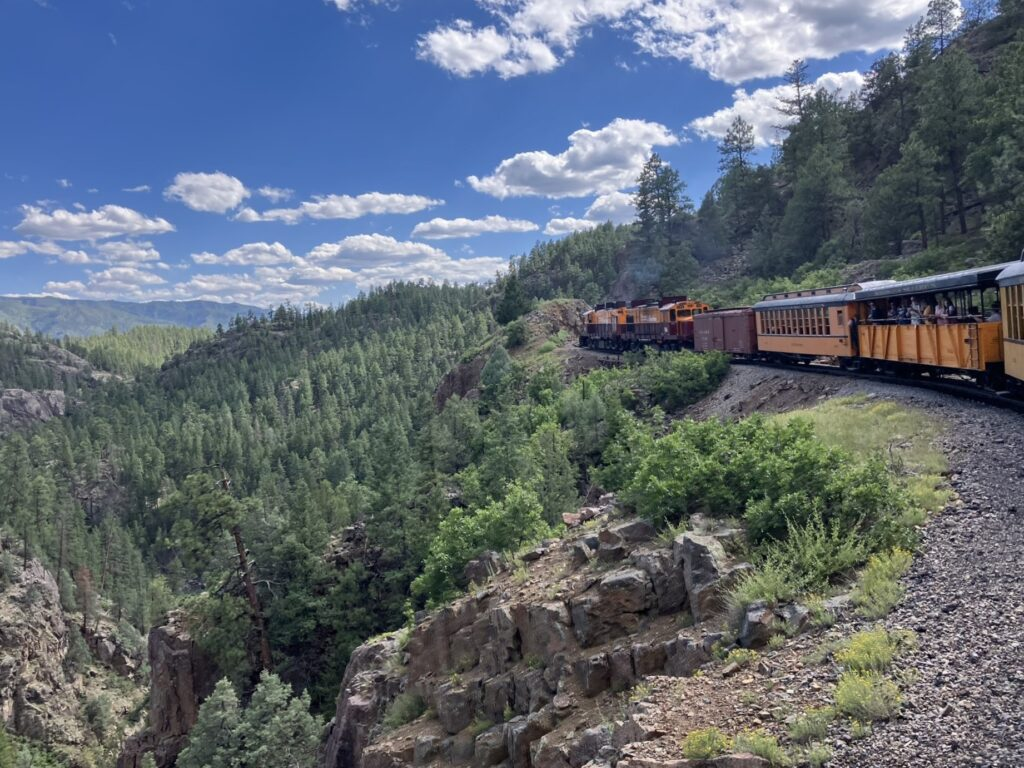
Today, all day, was the Durango and Silverton Railroad trip. There are a number of different train journeys departing from and returning to Durango during the day, with plenty of railroad crossings, and the sound of the train horn filling the air at those times, in the valley and mountains, adds to the Old West character of the town and region. The lure of the rail, and the images and feelings it evoke. People of all ages, children and adults alike, sitting on their back porches on in their gardens, along the river walk along which the rails run parallel and close by for a while, wading in the river, taking hikes, or just plain going about their business, constantly waved at us as we left the town and along the valley and returned, as did many cars, honking their horns as the train rolled by. Really nice. The American Railroad experience.
In fact, the railroad, then the Durango and Rio Grande, more-or-less built this town, establishing Durango along the banks of the Animas River in 1880 to serve the mines in the San Juan mountains, where silver and gold, and other minerals, had been found since 1872, leading to settlements like Silverton, north of Durango and well in the mountains.
The journey started at 8:15 am from the Durango station, and took a leisurely, and bumpy, 3½ hours to through the San Juan mountains, the southern portion of the Rockies, to reach Silverton. We wanted to take the trip by train one way and return by bus, as it seemed perhaps too much to take the same 3½ hour trip back, but instead we took the return trip by train, and glad we did, arriving back in Durango around 5:30 pm.

The day started out on the cool side, and especially as the train chugged into higher elevations, but warmed up to its usual temperature by the time we got to Silverton, only about 45 miles away, but a long, meandering, and twisty 45 miles away. The train first runs along the Durango valley, alongside houses, roads, and the Animas river, but then starts to gently ascend into the San Juan mountains. We started at abut 6,500 feet above sea level, slowly rising to about 9,300 feet by the time we reached Silverton, with of course, gorgeous, magnificent, and awe inspiring views throughout the the entire journey.

We sat in the open air observation car, which was filled with passengers on the right side, and empty on the other side, because it seemed that’s where the best views would be – but that wasn’t the case, and there were wonderful views from both sides of the carriage, on the way to Silverton and back.


As we rumbled along, the roads and valley dropped below us, and we slowly chugged higher into the mountains, the sound of the train horn echoing in the mountains. The downside, unfortunately, was the smell and sight of diesel exhaust spewing from the locomotive stacks.


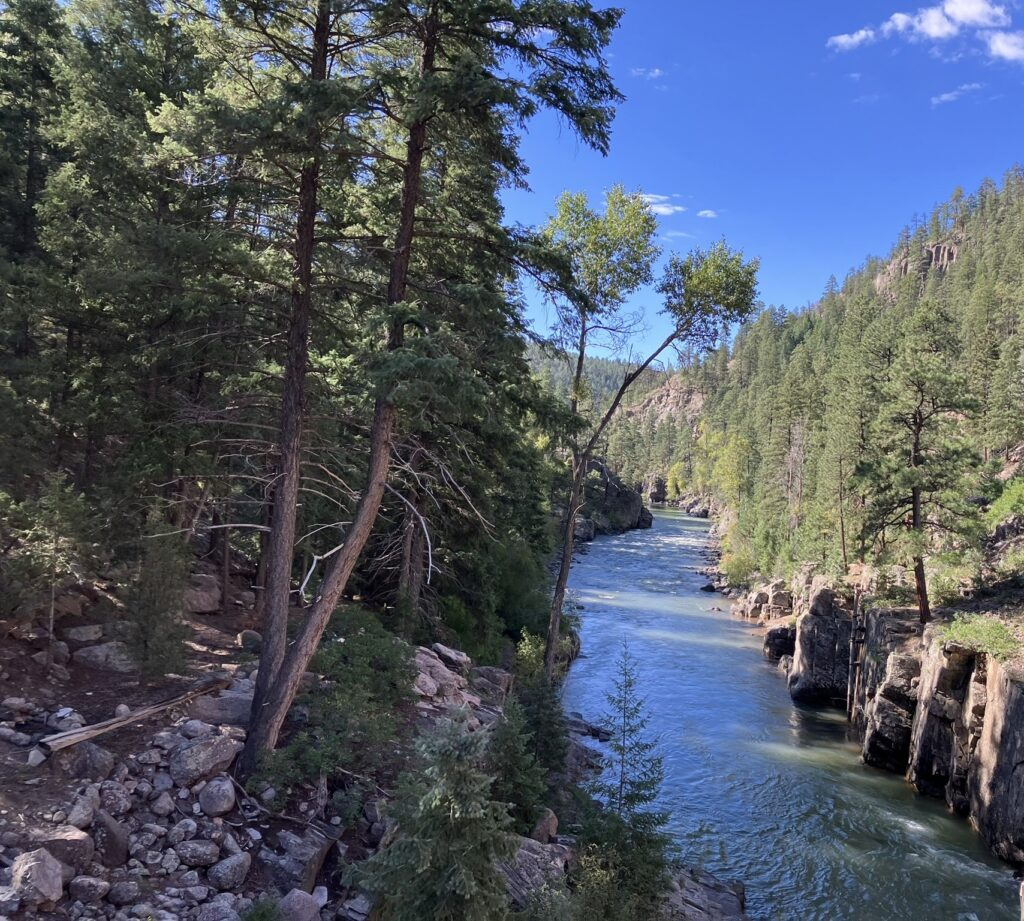

For a while we wondered how anyone could get this deep into the mountains, but as we rose higher and deeper into the mountains the train stopped several times to pick up (and later to drop off) backpackers, some of whom had spent days hiking and camping in the wilderness. Hardy! These mountains rise to around some 13,000 feet, and we heard several backpackers talk about the 14,000 feet mountains they’ve hiked (or climbed).
At one point, we passed a guy on a zipline, and the train conductor told us he waits for the train, and often does tricks while zip lining, as a way of advertising the business.


We arrived in Silverton right on time (these guys ought to be running the regular railroads), where we took a a 2 hour or so break, to visit and enjoy the town. The town sits at around 9,300 feet in elevation, but dwarfed by 13 and 14,000 feet mountains that surround it.

This entire area is mineral rich, and Silverton is an ex-mining town (not that long ago, and certainly into the 1980’s), sitting in a valley in the San Juan mountains, with a population of about 650 people. Other than one paved road in the center of the small town, the main streets and roads are dirt, and not only evocative of the way things were, but still are here in Silverton.
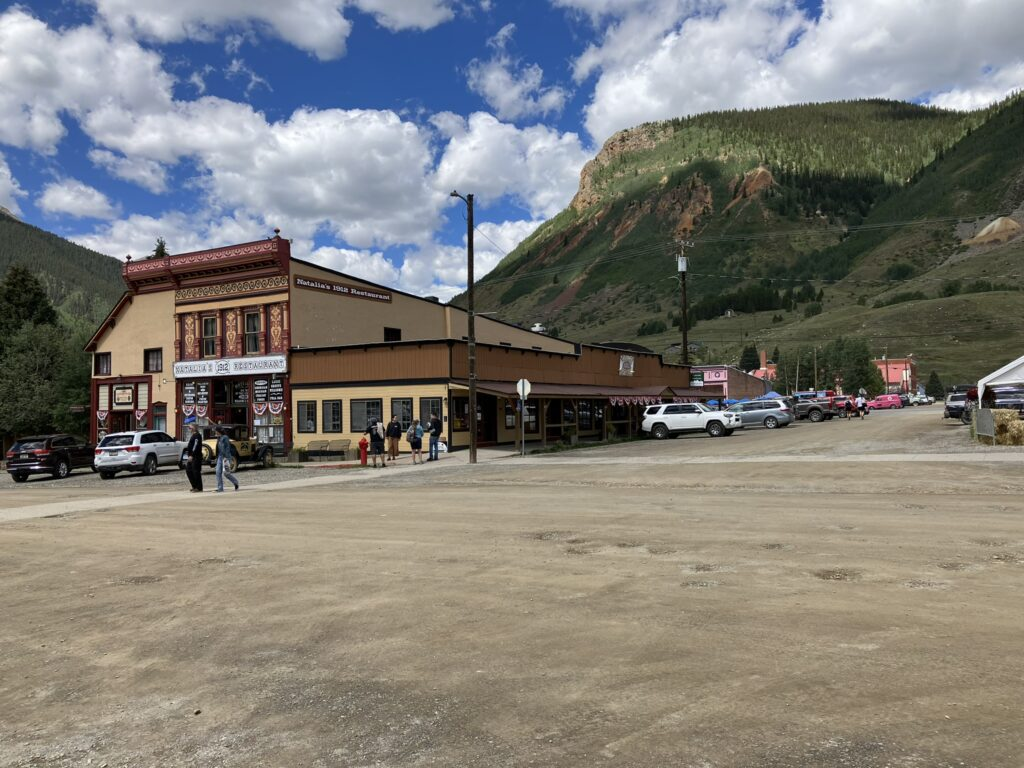
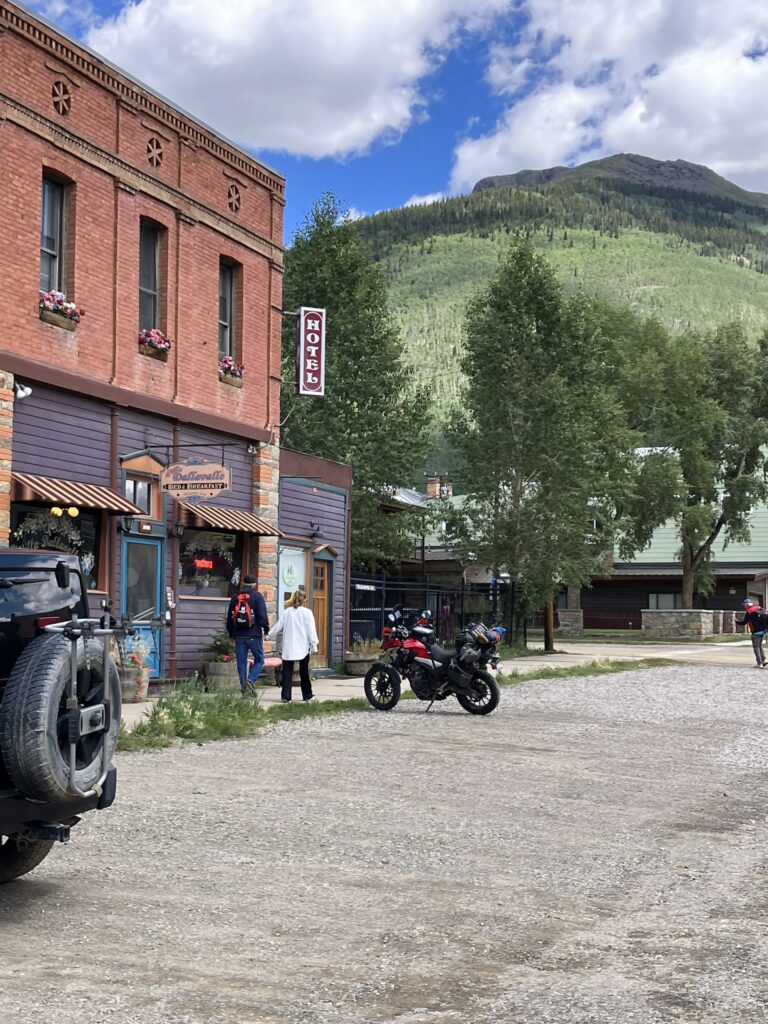


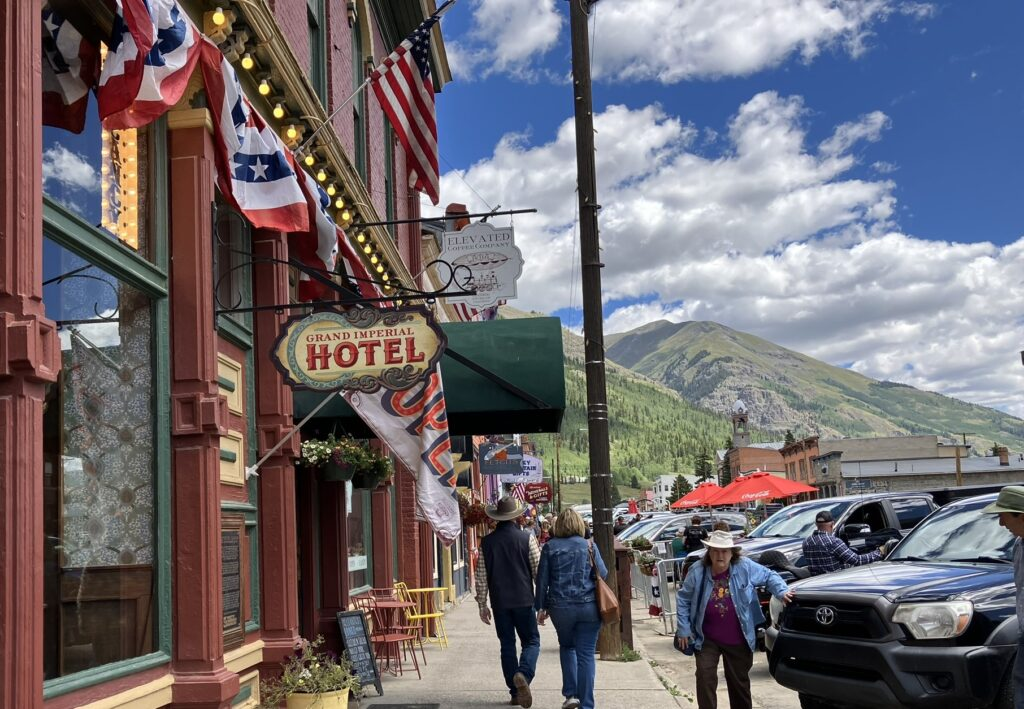
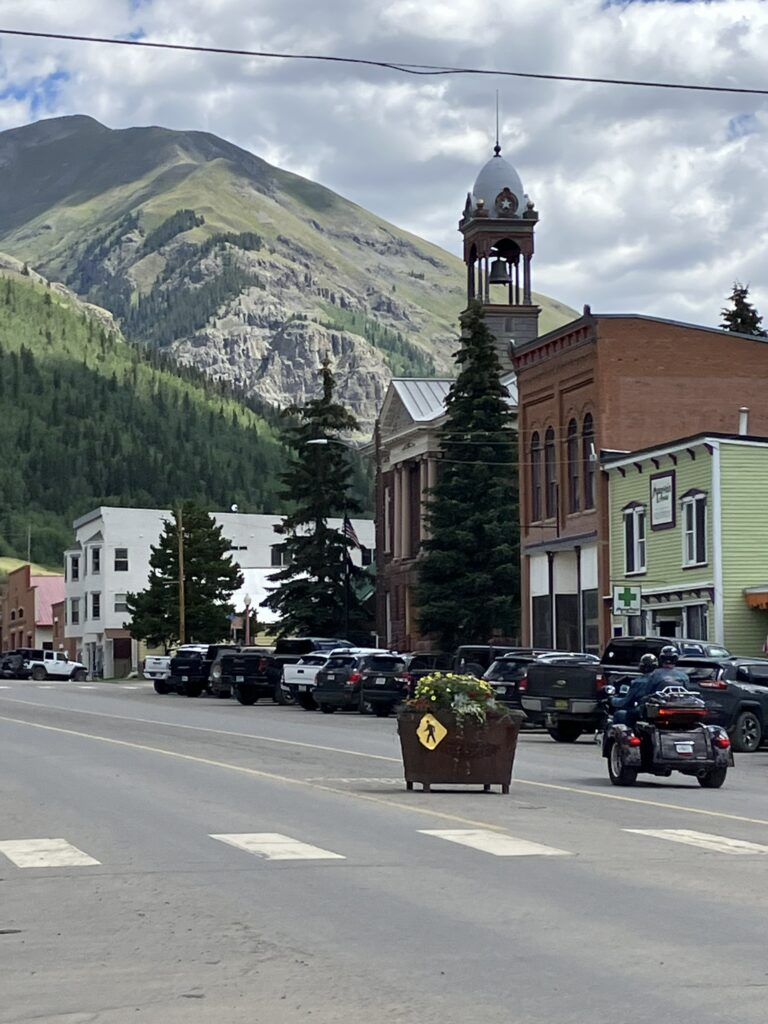

We spent our time walking around town, looking in some of the local shops, and took a short hike into the surrounding hills, before eating and heading back to the train.
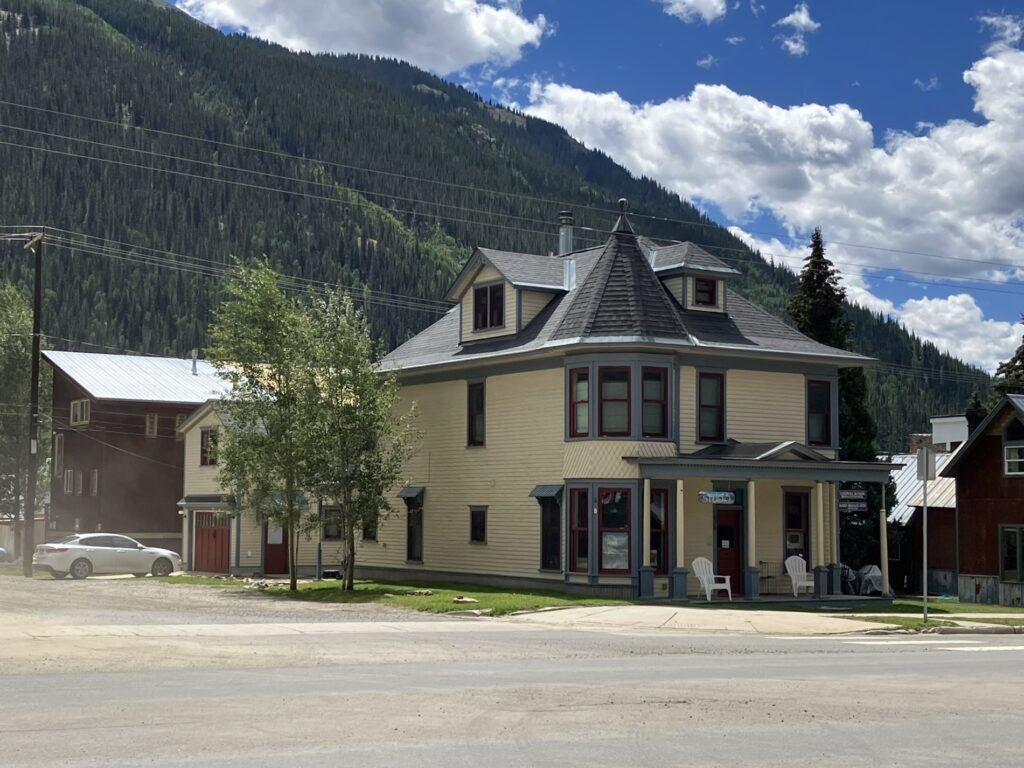
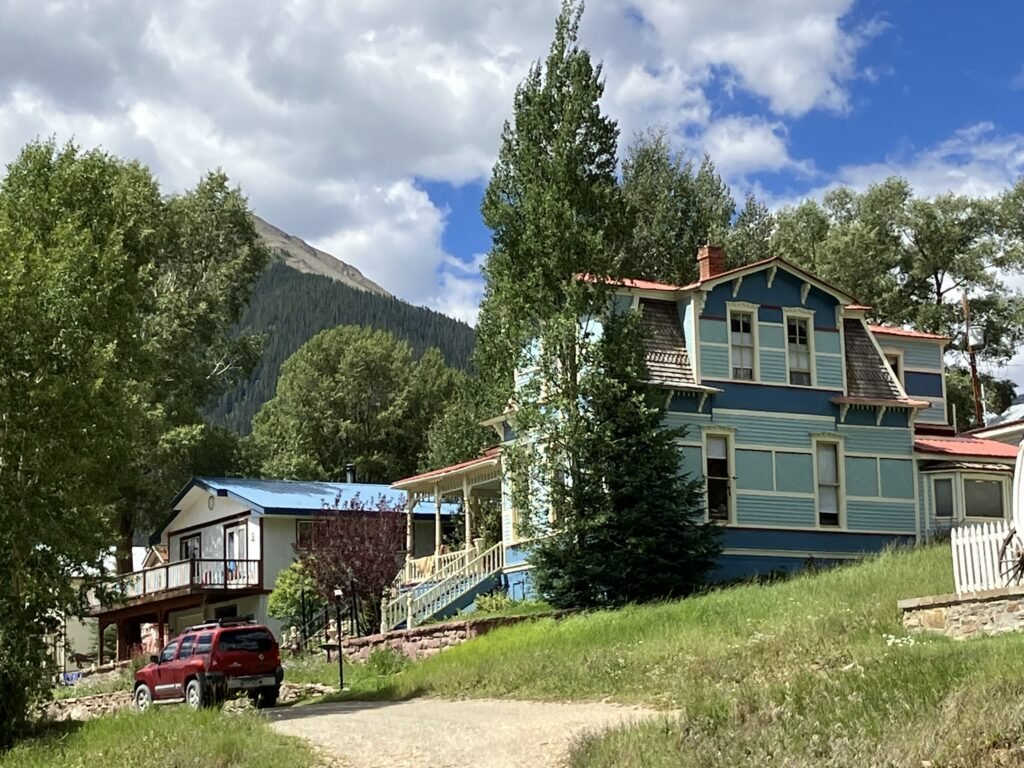

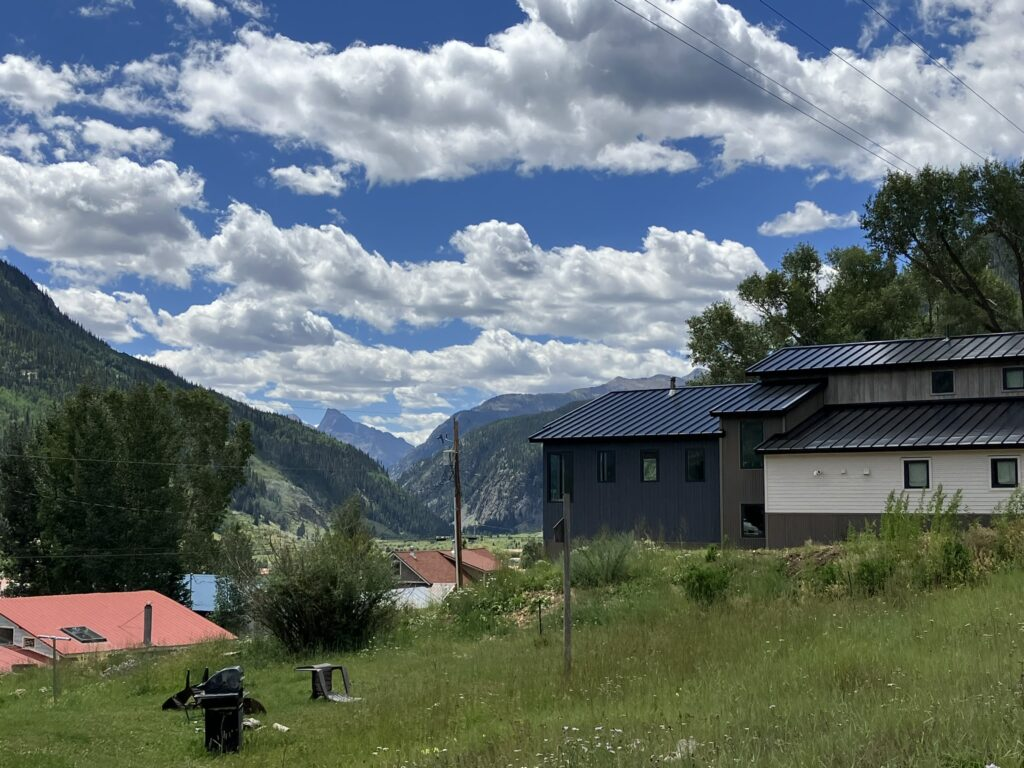
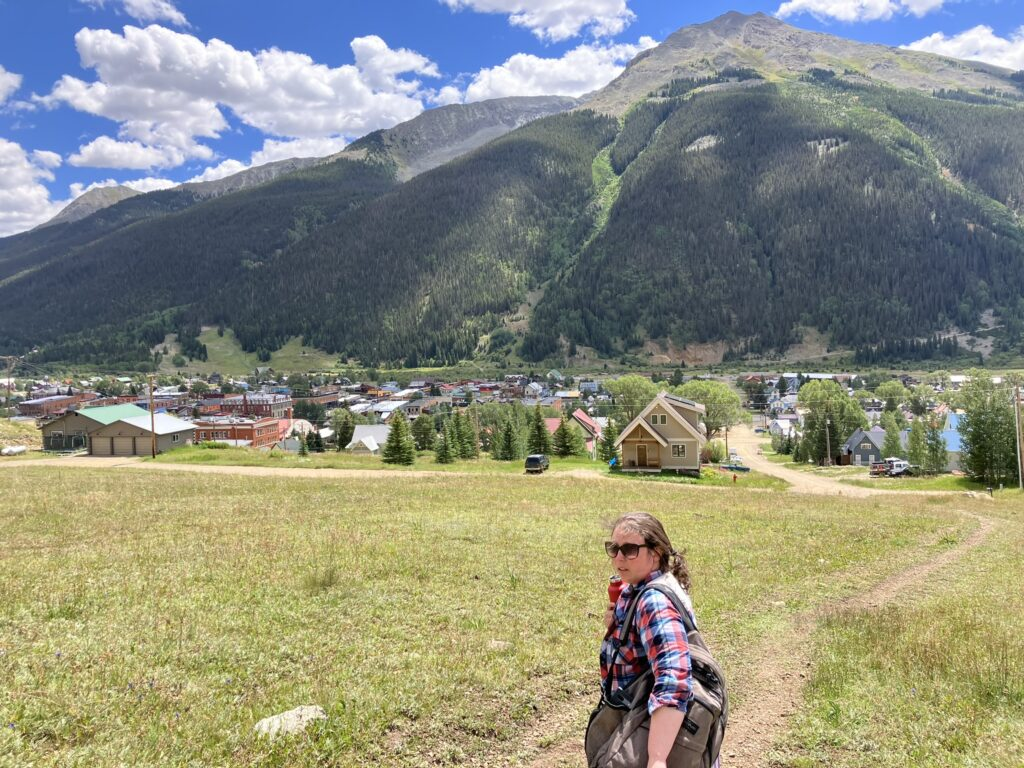
On our short hike into the hills, we met Joy, a very nice local woman, around my age, and she talked about the area and why she moved here from Kansas many years ago, and her son, who is a mountaineer who has climbed many of the local peaks, which she pointed out to us. She talked of her close friend whose husband passed about 3 months ago, and I told of her of Bev’s loss, and the reason for this trip. Another reminder of the inevitability and unfairness of loss, she told me that her husband died just 2 years after they married, some 25 years ago.
Then some lunch, and back to the train. We heard the four long deep whistles of the train, a reminder that it departs in 10 minutes, at 2 pm, which it did, pulling out of the train depot right on the dot, leaving Silverton behind and passing other trains waiting to leave.
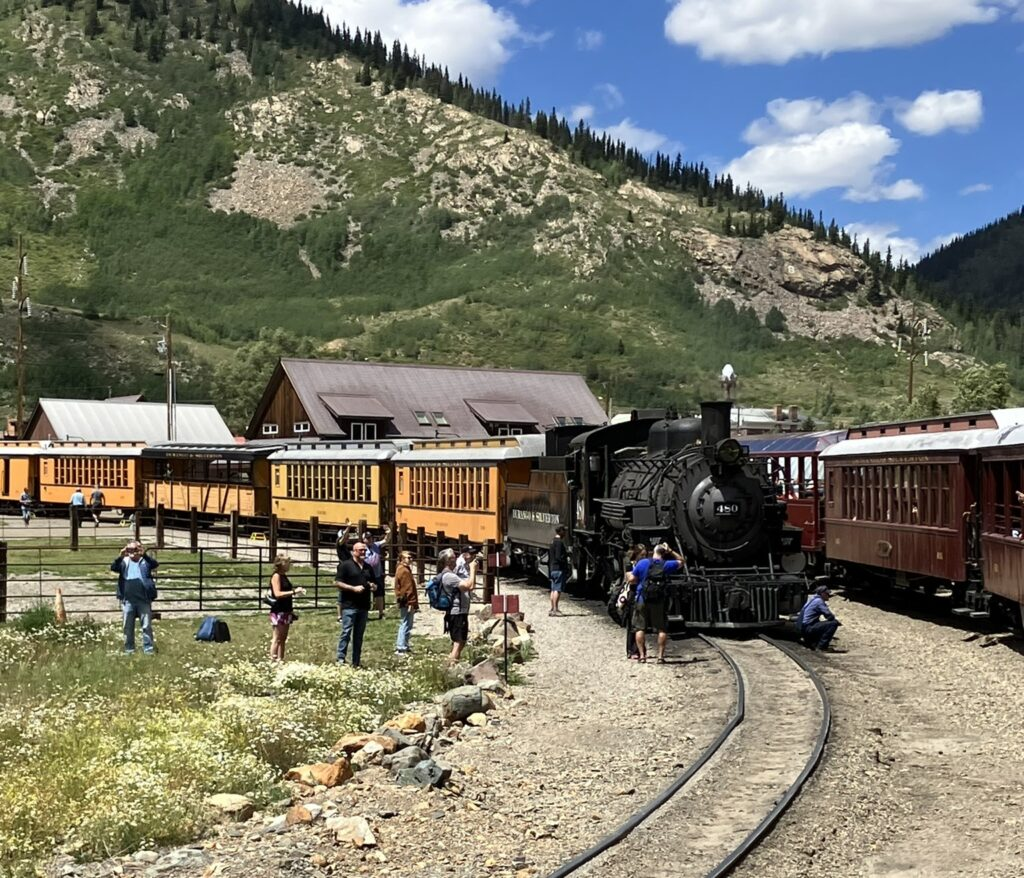

The journey back was as beautiful, of course, with different takes on the same wonderful views, as we facing the other direction, and we again stopped several times along the way to drop off and pick up backpackers.

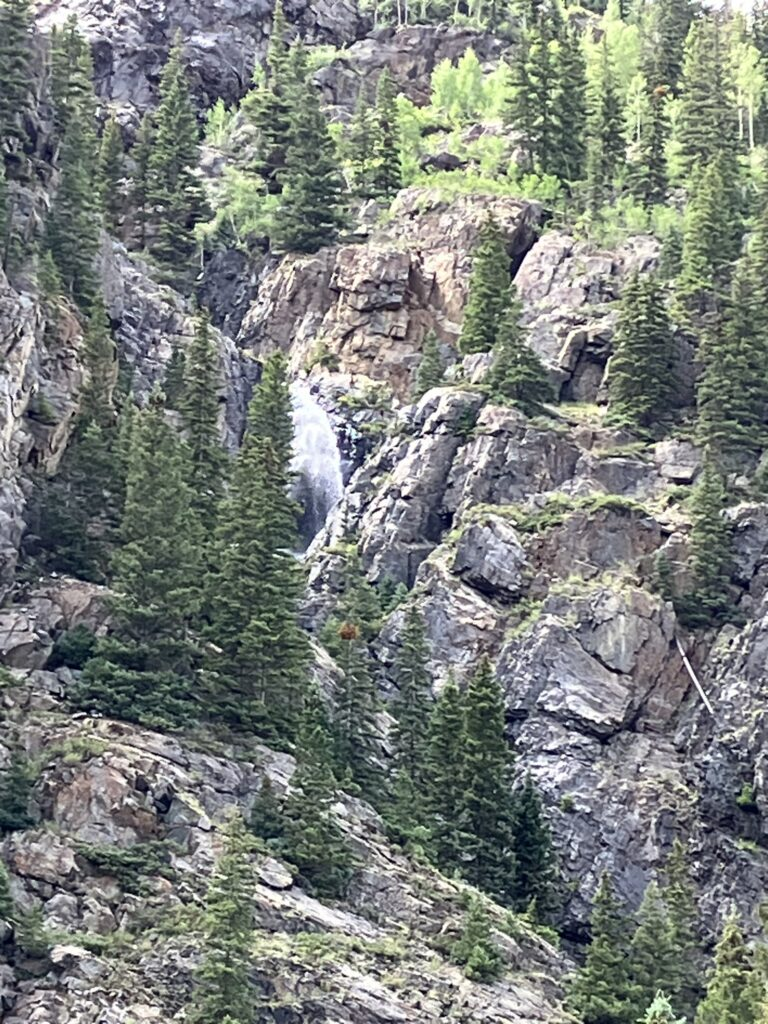
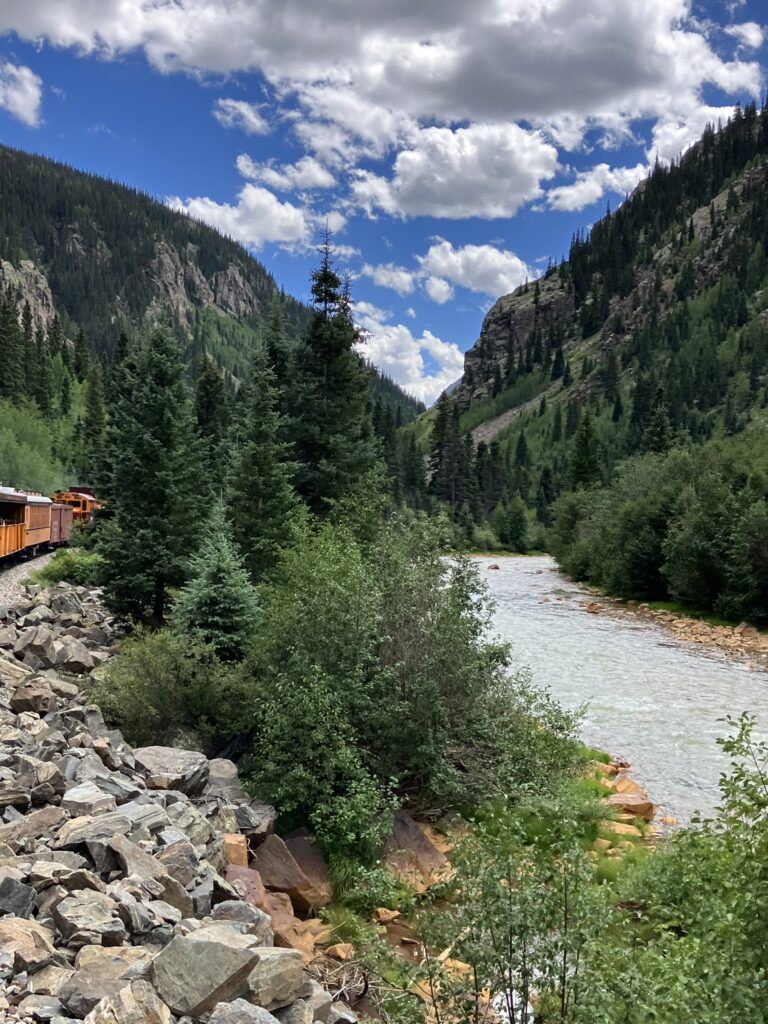

Along the way, the most eagle eyed passengers spotted bears in the mountains several times, excitedly letting other passengers know where to look. We also saw some deer and a fox at one point, but sorry to not see any mountain goats or sheep in the mountains.

And finally back into Durango. Passengers were tired by now, with some napping, including me (and Kaye), but sill elated by the day-long journey through the mountains, and along river and lake views. Drivers once again honked their horns at us and waved, as did locals walking, sitting, playing, and passing by. We waved back, of course. As we pulled into town, the train runs right alongside, maybe 12 feet away, from the river walk, making the train an intimate part of the local scenery and environment, with its deep whistle regularly announcing its presence.
Our final stop before taking a drive in the foot hills surrounding Durango, was the Durango and Silverton Railroad free museum, an eclectic blend of all sorts of things old and more current western, including railroad locomotives and carriages, antique cars, western military exhibits, local wildlife, and wonderful models and train gardens that would make Bev’s brother, Big Ken, envious.


We drove into the high hills surrounding Durango, and saw some very expensive homes, and also passed Fort Lewis College along the rim road overlooking the town. Fort Lewis, formerly a military base, is now a small liberal arts college that follows a 1911 mandate to give indigenous Americans tuition-free education. As we came back down into town, we drive some of the local streets, where we again saw lovely (abend presumably more affordable) local homes in well-kept residential neighborhoods. A lovely town.
Then, a short walk on the river walk to one of the small eateries’ and breweries right off the trail and some dinner, and back to the Adobe Inn for the night. Tomorrow, we head to Moab, Utah, and the Arches National Park.